Salicylic acid is a beta hydroxy acid, usually shortened to BHA. It is an oil-soluble exfoliant, which means it can work inside the pore and not just on the surface of the skin. That single quality is why it suits oily, blemish-prone and blackhead-prone skin so well: it reaches into the lining of the pore, where excess oil and dead skin tend to gather.
At the low strengths used in cosmetic skincare, salicylic acid helps the look of clearer, smoother, less congested skin. It is a patient ingredient. You give it a few weeks, not a few days, and you keep the rest of your routine simple around it.
Quick answers
What does salicylic acid do to your skin?
It gently loosens the mix of oil and dead skin cells that can block a pore. Because it is oil-soluble, it can settle into the pore itself, which is why skin often looks less congested and feels smoother with regular use. You are not scrubbing anything away by force. The action is gentle and chemical, which tends to be kinder than a harsh physical scrub.
How often should you use salicylic acid?
Start with two or three times a week and see how your skin feels. Many people build up to daily use of a mild leave-on product, but there is no prize for rushing. If skin feels tight or looks pink, space it out.
How fast does salicylic acid work?
Think in weeks. Some people notice skin feels smoother within a week or two, but a fairer judgement comes after four to six weeks of steady use. Skincare rewards consistency more than intensity.
How long can you use salicylic acid?
It is fine as a long-term part of a routine for most people. You do not have to stop after a set number of weeks. Simply adjust the frequency to whatever keeps your skin comfortable.
Is salicylic acid for skin the same as wart and corn removers?
This is worth clearing up early, because it causes real confusion. In the pharmacy, salicylic acid (salicylzuur in Dutch, acide salicylique in French) is also the active ingredient in high-percentage wart and corn removers, the ones sold for wratten, likdoorn and verrues. Those products use much stronger concentrations for a completely different job. They are meant for a small, targeted patch of thickened skin, never for your face.
The salicylic acid in this article is the low-percentage cosmetic version, made to help the look of the skin on your face. If you are dealing with a wart or a corn, that is a medical question. Ask a pharmacist or a doctor rather than reaching for a face product.
Salicylic acid works quietly inside the pore. Results show up in weeks, not overnight, and that is exactly how it should be.
How is salicylic acid different from AHAs like glycolic acid?
The short version is oil versus water. AHAs such as glycolic and lactic acid are water-soluble, so they mostly work on the surface, smoothing and brightening the top layer of skin. Salicylic acid is oil-soluble, so it can move through the oil in a pore and work on the inside of it. That is why a BHA is often the better pick when the main issue is congestion, blackheads or oiliness rather than dullness or rough texture. Neither is better in the abstract. They simply do different jobs, and plenty of people end up using one of each on different days once their skin is comfortable. If you want the full comparison, our guide to AHAs and BHAs lays it out side by side.
Who is salicylic acid best for?
It tends to suit oily skin, combination skin and anyone whose main frustration is blocked or visible pores. If your skin leans blemish-prone, a BHA is one of the more sensible actives to try, and we cover the wider picture in our piece on what actually helps blemish-prone skin. If blackheads are the specific concern, salicylic acid is a natural fit, and there is more detail in what actually works on blackheads. It can also help pores look less obvious over time, which we explore in what actually helps with large pores.
Dry or easily irritated skin can still use salicylic acid, just more gently and less often. If your skin is very sensitive or reactive, go slowly and pay attention to how it feels.

How do you apply salicylic acid?
Cleanse first, then apply your salicylic acid, then moisturise. A leave-on product like a toner goes on clean, dry skin before heavier creams. A targeted treatment is dabbed only on the spots you want to help. Keep the rest of your routine calm while your skin adjusts, and always finish your morning with sunscreen. If you are new to acids, patch a small area first and give it a day before going all in.
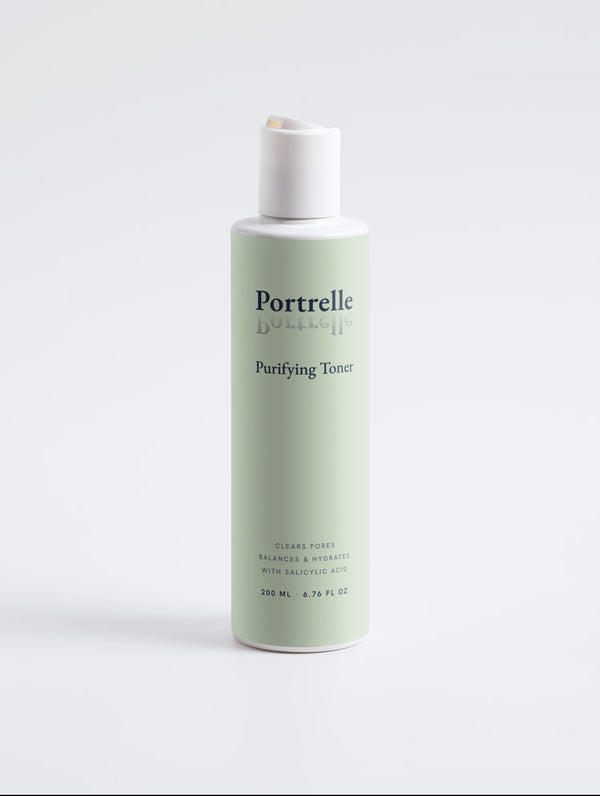
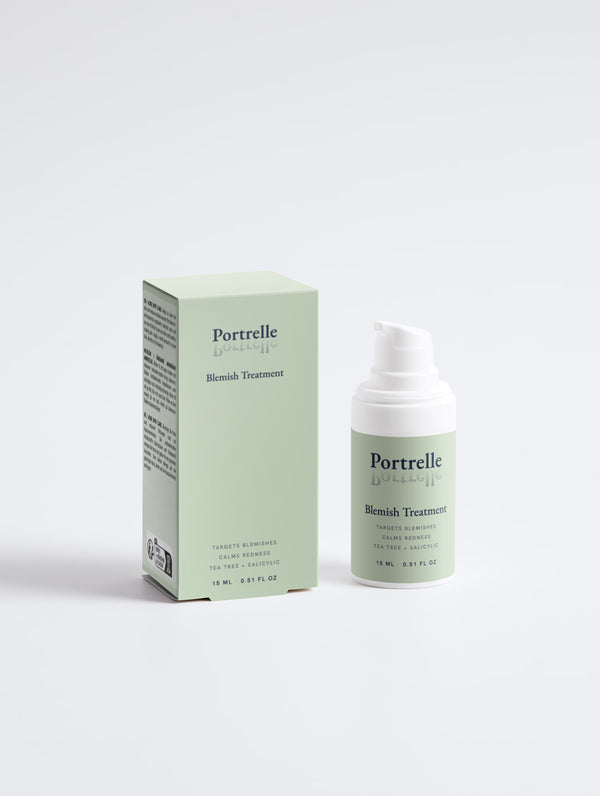
Portrelle uses salicylic acid in two products. Our Purifying Toner is a leave-on toner for blemish-prone skin that you can work up to using daily. Our Blemish Treatment pairs salicylic acid with tea tree for a targeted dab on individual blemishes. You do not need both to start. Pick the one that matches how your skin behaves.
Can you use salicylic acid with other actives?
You can, but ease into it. When you are just starting, avoid stacking salicylic acid with a strong AHA on the same night, since two exfoliants at once is the fastest way to overdo it. The same goes for pairing it with retinol before your skin is used to either. A simple rhythm is to use your BHA on some evenings and keep other evenings gentle.
One rule matters more than the rest: any kind of exfoliation makes daily sunscreen non-negotiable. A broad-spectrum SPF in the morning protects the fresher skin you are encouraging and keeps the results looking their best.

What can you expect, and when?
Early on, skin often just feels smoother and looks a little less congested. Over four to six weeks of steady use, pores can look clearer and the overall surface can look more even. Start on a clean base: a gentle cleanser for blemish-prone skin, then your salicylic acid, then moisturiser and sunscreen. You will notice we do not chase the highest possible percentage. A sensible cosmetic strength used consistently tends to serve skin better than a strong one used nervously. If you notice tightness, redness or flaking, that is your cue to use it less often, not more. Slow and steady is the honest path here, and it is the one that tends to keep skin comfortable.
Read next
- Face Toner: What It Actually Does and Which One Suits Your Skin
- Which Exfoliant Suits Your Skin: AHA, BHA or a Scrub?
Experiences vary from person to person, and this article is for information only, not medical advice. If you have a persistent skin concern, a wart, a corn, or you are unsure what suits you, please speak to a pharmacist, doctor or dermatologist.