What actually works on blackheads is quieter than the videos suggest. Salicylic acid that works inside the pore, a clay mask now and then, and a gentle routine you keep up for a few weeks. What makes them worse is almost everything that feels satisfying: squeezing, pore strips as a habit, and scrubbing hard. And the dark dots are not trapped dirt, so scrubbing was never going to wash them out.
Quick answers
What are blackheads?
Blackheads are open comedones. A pore fills with sebum and dead skin cells, stays open at the surface, and the top oxidises in contact with air. That oxidation is what turns it dark. It is not dirt sitting on your face.
How do you get rid of blackheads on your nose?
Honestly, you often cannot fully, and that is worth knowing before you start. A lot of what you see on the nose are sebaceous filaments, a normal skin feature that always refills. You can help the look of them with salicylic acid and a clay mask, but squeezing tends to backfire.
What works against blackheads?
Consistency with an oil-soluble exfoliant like salicylic acid, plus a clay mask when your skin feels congested. Slow and steady supports a clearer look far better than one aggressive session.
Do blackheads come back?
Usually, yes. Pores keep making oil, so this is ongoing care rather than a one-time fix. That is normal, and it is not a sign you are doing anything wrong.
Are blackheads caused by dirt?
No. The dark colour comes from oxidised sebum reacting with air, not from grime you failed to wash off. This is exactly why scrubbing harder does not help and can leave your skin irritated instead.
What are blackheads, and how do they form?
Your skin makes sebum, an oil that keeps it soft. When sebum mixes with dead skin cells inside a pore and the pore stays open at the top, you get an open comedone. Air reaches the surface of that little plug and oxidises it, the same way a cut apple browns. The result looks like a tiny dark dot. You will notice them most where skin is oiliest: the nose, the chin, the forehead, that central T-zone.
This is the myth worth retiring: blackheads are not dirt, and they are not a sign that you failed to wash your face. The colour is oxidation, not grime. That single fact changes how you treat them, because you stop trying to scrub something off the surface and start supporting the pore itself. If your skin also tends toward spots, our guide to blemish-prone skin and what helps pairs well with this one.
Why won't the blackheads on your nose fully go away?
Here is the honest part most brands skip. Much of what people call blackheads on the nose are not blackheads at all. They are sebaceous filaments: tiny, greyish, evenly spaced dots that line the pores around your nose and chin. They are a normal, healthy feature of oily areas, and they help move sebum up to the surface where it belongs.
The important thing about sebaceous filaments is that they always refill. You can empty one, and within days it fills again, because that is its job. No product and no amount of squeezing removes them for good. Anyone promising a nose with zero visible pores is selling you something skin simply does not do. If large pores are your main worry, we go deeper in large pores and what actually helps.
You can keep your pores looking clearer for weeks at a time. You cannot scrub your skin into something it was never built to be.
What actually supports clearer-looking pores over time?
A few gentle, almost boring habits do more than any single dramatic treatment.
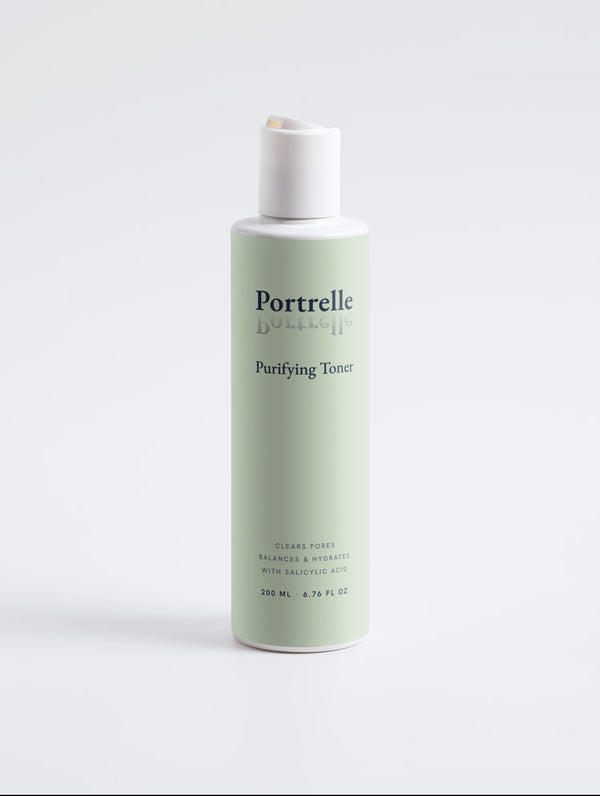
Salicylic acid. This is the one ingredient worth learning about. Salicylic acid is oil-soluble, which means it can get past the surface and work inside the oily lining of the pore, loosening the mix of sebum and dead cells that gathers there. Used a few times a week, it helps pores look clearer and feel less congested, without the tugging or grit that irritates skin. Our Purifying Toner is built around it, and if you want the full picture, we wrote a plain-English explainer on how salicylic acid works.
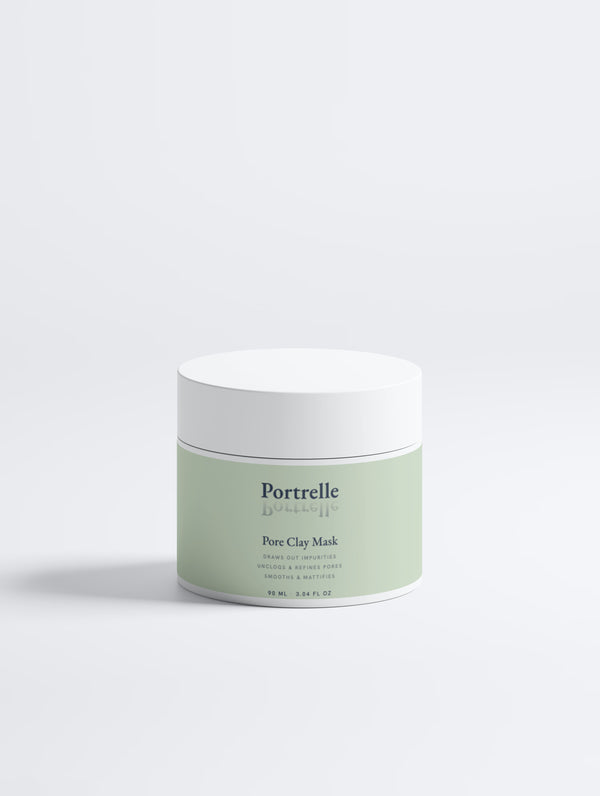
A clay mask. Clay absorbs surface oil and gives congested-feeling skin a fresher, more matte look. It will not permanently empty a pore, but used once or twice a week it is a satisfying, low-risk way to manage shine and that clogged feeling. Our Pore Clay Mask is made for exactly this.

Gentle exfoliation. If your skin tolerates it, an AHA like glycolic acid works on the surface to keep dead cells from piling up and making pores look rougher. It is a different tool from salicylic acid, and the two are easy to confuse, so we compared them in our glycolic acid, AHA and BHA guide. Not sure which type suits your skin? Our guide to choosing an exfoliant puts AHA, BHA and scrubs side by side. Whatever you choose, once you find something your skin likes, the real trick is simply keeping it up.

What makes blackheads worse?
This is where most of the damage happens, and it is usually done with good intentions.
- Squeezing. Pressing at a pore can push its contents deeper, inflame the surrounding skin, and leave a mark that lingers far longer than the blackhead would have. If a spot is painful or sitting under the skin, that is a job for a professional, not your fingernails.
- Pore strips as a habit. They are oddly satisfying and the result is real, but temporary: you pull off the tops of filaments that refill within days. Used often, the tugging can stress and irritate the skin around your nose. An occasional strip is fine. A daily ritual is not.
- Harsh scrubs. Gritty scrubs feel like they are doing something, but scrubbing a blackhead does nothing to the oxidised plug inside and can leave skin red and reactive. Since the dark colour is oxidation, not surface dirt, there is nothing there to buff away.
- Over-washing. Stripping your face several times a day can nudge oil glands to produce more, not less. Twice a day with a gentle cleanser is plenty.
What should a simple blackhead routine look like?
Keep it short enough that you will actually do it. Cleanse gently morning and night. A few evenings a week, use a salicylic acid product on clean, dry skin. Once or twice a week, add a clay mask if things feel congested. Always follow with a moisturiser, and wear sunscreen through the day, because exfoliating acids leave skin more sensitive to light. Then give it time. Skin renews on its own schedule, and most people need several weeks of steady care before the look of their pores settles into something they are happy with.
The honest summary: you are managing a normal, ongoing feature of healthy skin, not fixing a flaw. Gentle and consistent beats harsh and hopeful every single time.
Read next
- What Is Sebum? Why Skin Makes Oil and How to Calm Overproduction
- Which Exfoliant Suits Your Skin: AHA, BHA or a Scrub?
Everyone's skin is different, and experiences vary from person to person. This article is for general information and is not medical advice. If a skin concern is painful, persistent, or worrying you, please speak to a doctor or dermatologist.