The best SPF for your face is the one you will actually wear every day, and for most people that means a broad-spectrum SPF30 or SPF50 made for facial skin. UVA rays reach your skin all year, through clouds and window glass, and they are the main reason skin ages and pigments over time. A daily facial sunscreen is the simplest step to help skin look even and feel comfortable for longer.
Why should I use SPF on my face every day?
Sunlight carries two kinds of rays that matter here. UVB is the one that burns. It is strongest in summer and around midday, and it is the reason you go red after a long afternoon outside. UVA is quieter. It stays fairly constant through the year, passes through cloud cover, and comes through the glass in your car and by your window at work.
UVA is the ray most linked to how skin ages and how uneven patches appear over time. Because it is present on grey days and indoors near windows, a sunny holiday is not the only time your face meets it. That is why a small daily habit tends to do more for the look of your skin than an occasional heavy application in July. You can read more on why daily SPF is the one non-negotiable.
SPF30 or SPF50 for your face: which should you pick?
Both are good choices, and the honest difference is smaller than the numbers suggest. Worn correctly, SPF30 filters roughly 97% of UVB rays and SPF50 filters roughly 98%. No sunscreen blocks 100% of UV, and no number lets you stay in the sun indefinitely.

Think of it this way. SPF30 is plenty for everyday life, walking to work or sitting near a window. SPF50 gives a little more margin for long days outdoors or if your skin marks easily. What matters far more than the exact figure is applying enough and topping it up, which most of us underdo. A generous layer you reapply beats a higher number applied just once.
The sunscreen that helps your skin most is simply the one you enjoy wearing every single day.
What is the best sunscreen for your face?
For faces, texture and finish decide whether a sunscreen becomes a habit. Many mineral formulas can leave a pale film, often called a white cast, which is where a light tint helps. A tinted SPF evens out colour as it protects, so it can replace a light base on quiet days. The right finish, whether matte or dewy, is often what turns SPF from a chore into a daily habit.
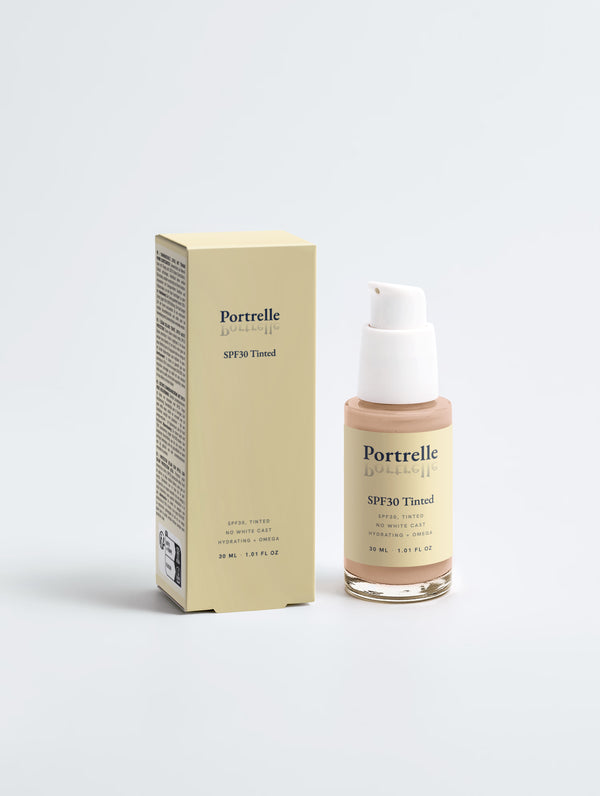
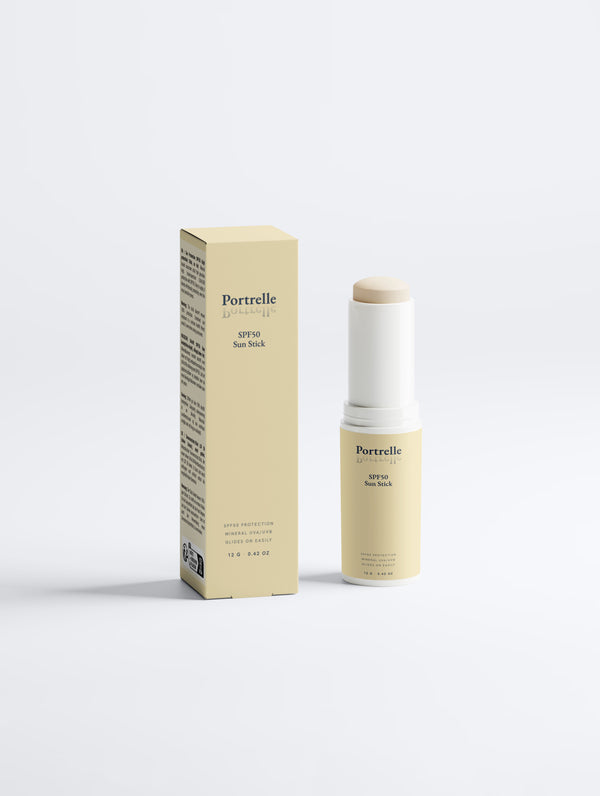
Our SPF30 Tinted is a daily facial sunscreen with a soft tint, made to sit comfortably under the rest of your routine. For touch-ups later in the day, a stick is easier than a cream. The SPF50 Sun Stick is a mineral stick with no tint that you can glide over cheeks and nose without a mirror, and there is a tinted stick version too.
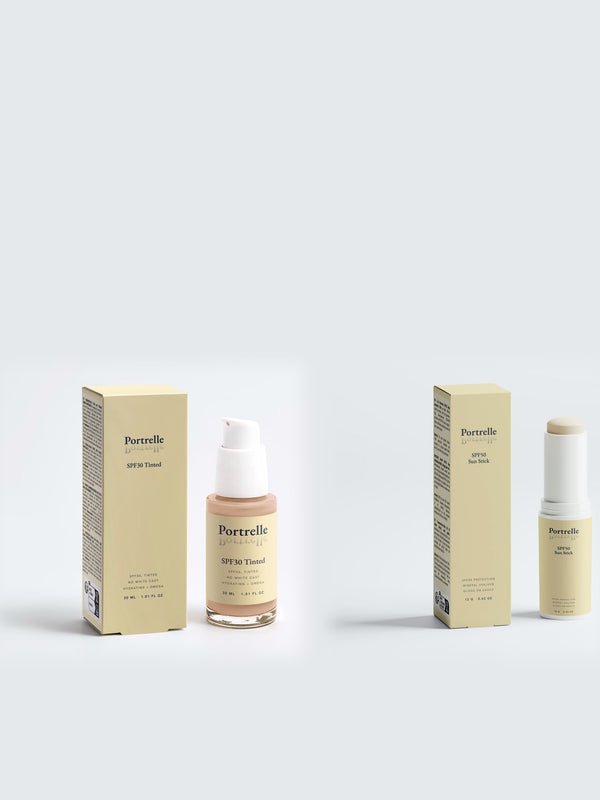
If you would rather start with both a base layer and a portable top-up, the Sun Duo pairs the SPF30 tinted sunscreen with an SPF50 stick in one set. It is our easiest way to cover the morning application and the midday reapply. You can also browse the full sun collection to compare finishes.
How often should you reapply face sunscreen?
When you are out in the sun, reapply roughly every two hours, and sooner after swimming, sweating or towelling your face. Sunscreen wears off through the day, so the morning layer alone will not carry you to evening if you are outdoors.

On an ordinary indoor day this matters less, though a midday refresh is still a good idea if you sit by a bright window. A stick makes this painless because you can top up over makeup without disturbing it. Keeping a stick in your bag or on your desk removes the excuse to skip it. Apply enough as well, since a thin layer gives you less protection than the label suggests.
Does daily SPF help with dark spots?
Sun exposure is one of the most common reasons dark spots look more noticeable, because UV can deepen existing pigment. Wearing SPF each day helps shield skin from that extra colour, which is why sunscreen belongs in almost any routine focused on a more even look. We go deeper in our guide to what actually helps with dark spots.
One important note. If a dark spot is new, changing shape or colour, or simply looks different from the rest, see a GP or dermatologist rather than treating it at home. Skincare can support how your skin looks, but a professional should check anything that seems to be changing.
Quick answers
Do I need SPF on my face in winter?
Yes, because UVA stays fairly steady all year and passes through cloud and glass. A daily SPF30 is a sensible baseline even on grey days.
Is SPF50 better than SPF30 for the face?
SPF50 filters slightly more UVB, around 98% versus 97%, so it gives a little extra margin. Applying enough and reapplying matters more than the number itself.
How much sunscreen should I use on my face?
Aim for about two finger lengths for the face and neck. Too little is the most common reason SPF underperforms.
Which Portrelle sunscreen should I start with?
The Sun Duo covers a tinted morning layer and an SPF50 stick for top-ups. If you are unsure, find your ritual to match products to your skin.
Read next
- Aftersun: What Your Skin Actually Needs After the Sun
- Sun Allergy (PMLE): What It Is and What Honestly Helps
- SPF 30 or 50: What the Numbers Mean and Which to Pick
Experiential claims describe how skin looks and feels. Individual results vary.