Answer first: the right face oil depends on your skin, not on which bottle looks prettiest. If your skin leans oily or combination, a light oil that behaves like your own sebum tends to sit best. If it feels dry, tight or mature, a richer oil gives more comfort. If you want the softening feel of an oil plus an ingredient aimed at the look of fine lines, look at the bakuchiol route. Below is an honest chooser, including one oil we do not sell.
A quick word on language, because it trips people up. In Dutch, people search for "huidolie", which means skin oil and is broader than a face oil. Most of the oils here work on the body too, so we will cover that briefly. Everything else is about your face.
Quick answers
What does a face oil actually do?
An oil sits on the surface, helps soften skin, and slows the moisture that escapes through the day. It does not add water. It seals and smooths, which is why an oil feels richer than a watery serum and why it works best as a last step.
Which face oil is best?
There is no single winner. Jojoba suits oil-shy and combination skin, argan suits dry and mature skin, sweet almond is a gentle all-rounder, and bakuchiol is the pick when you want the look of fewer fine lines. Match the oil to your skin, not to the marketing.
How often should you use a face oil?
Start in the evening, a few drops, as the final step. A few nights a week is plenty to begin with. If your skin likes it, you can move to nightly, and some people press a single drop in under sunscreen in the morning.
How long does a face oil stay good?
Roughly 6 to 12 months once opened. Oils oxidise slowly, so keep the bottle out of sunlight and away from heat. If it starts to smell sharp, flat or waxy instead of its usual self, retire it.
Is a face oil or a body lotion better?
They do different jobs. A lotion carries water, so it hydrates. An oil has no water, so it seals and softens what is already there. On the body either works, and together they layer nicely: lotion first, oil on top.
Which oil suits your skin?
Here is the honest version, in one table. Each name links to a deeper read, so you can read more on whichever one fits. For the wider background on how facial oils work, our facial oil guide covers it in full.
| Your skin or goal | Oil to try | Why it fits |
|---|---|---|
| Combination or oil-shy | Jojoba | Light and close to your own sebum, so it rarely feels greasy. |
| Dry or mature | Argan | Richer and nourishing, with a comforting, cushioned finish. |
| Wants a soft all-rounder | Sweet almond | Classic, gentle and easy. We do not sell it, and anyone with a nut allergy should skip it. |
| Wants the look of fewer fine lines | Bakuchiol route | An oil carrying bakuchiol, often chosen as a gentler alternative to retinol. |
Two of these need a word more. Jojoba is the easy starting point, because it behaves so much like the sebum your skin already makes that even oilier faces tend to get along with it. Argan is the opposite end: heavier, warmer, the one dry and mature skin reaches for when it wants comfort. Our own oil leans on both, which we will come back to.
Sweet almond is the one to be honest about. It is a lovely, soft, low-drama oil, and it is easy to find as a single-ingredient bottle in most health shops. We simply do not make it, so we are not going to pretend otherwise. If you have a nut allergy, leave it on the shelf and choose one of the others.
If an oil we do not stock is the honest match for your skin, we would rather say so than sell you something that fights it.
The bakuchiol route is a little different from the other three. Here the oil is mostly a carrier. What people are after is bakuchiol itself, a plant-derived ingredient often chosen when retinol feels too strong. If that is your interest, the deeper read linked in the table above walks through what it is and what it realistically does for the look of skin.

Face oil or body lotion for the rest of you?
Since "huidolie" covers the whole body, this question comes up a lot. The short version: a lotion hydrates because it is mostly water, while an oil seals and softens because it is not. Neither one is better, they just do different things. On dry legs or elbows, either will help. If your skin is really parched, do both: smooth on the lotion first, then a thin layer of oil to hold that softness in place. On the face, the same logic applies, which is why an oil goes on last.
How do you actually use a face oil?
Keep it simple, and start small. On clean skin in the evening, warm two or three drops between your fingertips, then press them over your face and neck. You are not rubbing hard, you are letting the warmth of your hands help the oil settle. A little goes a long way, so begin with less than you think you need. You can always press in one more drop.
As for how often, ease in rather than diving straight to daily. A few evenings a week tells you quickly whether your skin is happy. If it is, go nightly. If you want a daytime drop, keep it to one and let it settle fully before sunscreen, so nothing has to work through the oil.
How long does a bottle stay good?
Face oils are not forever. Once opened, most sit comfortably in the 6 to 12 month window, and lighter, more stable oils like jojoba tend to last toward the longer end. Air, warmth and light are what age them, so store the bottle in a cupboard rather than on a sunny shelf, and close the cap properly. The simplest test is your nose: fresh oil smells clean and mild, while an oil past its best turns sharp or faintly waxy. When in doubt, sniff it, and if it smells off, let it go.

Where does Portrelle fit?
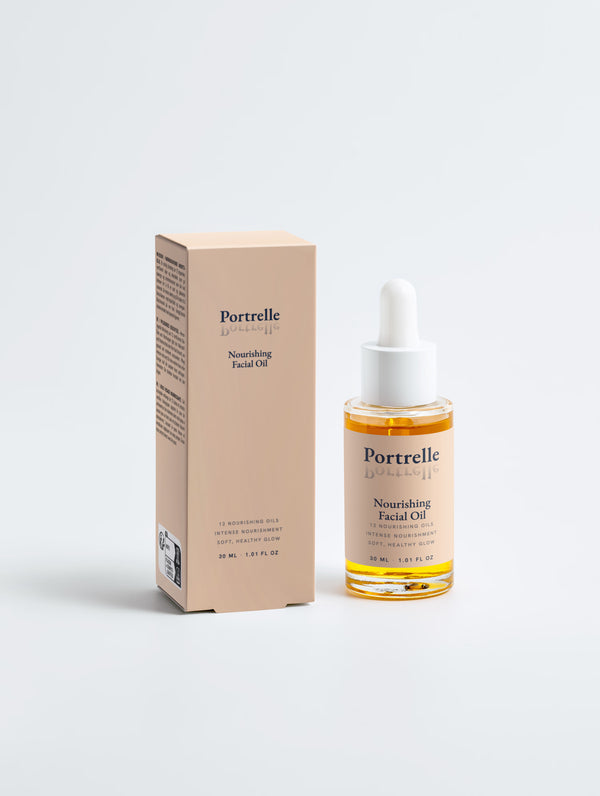
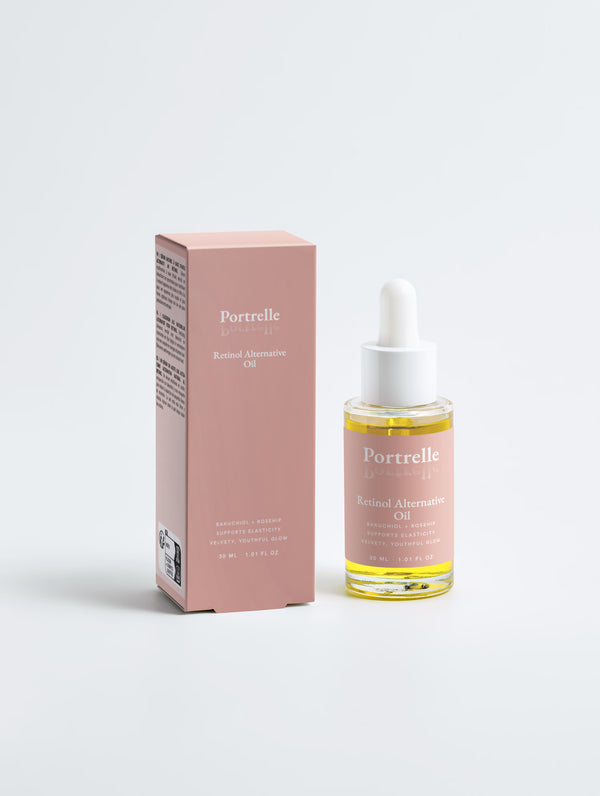
We keep the range small on purpose, so there are really two answers. If you want the light-and-nourishing combination in a single bottle, our Nourishing Facial Oil is built on jojoba and argan, which covers both the oil-shy and the dry ends of the table above. If your interest is the bakuchiol route, our Retinol Alternative Oil adds bakuchiol to a facial oil base. And if it is plain sweet almond you are after, a single-ingredient bottle from a health shop does the job perfectly well, and we are happy to send you there.
That is the whole chooser: light jojoba for skin that fears oil, rich argan for skin that wants comfort, gentle almond as an all-rounder we do not carry, and bakuchiol when the look of fine lines is the goal. Start with a few evening drops, see how your skin feels, and adjust from there.
This article is general information about skincare textures, routines and appearance. It is not medical advice. If you have a specific skin concern, a persistent reaction, or a nut allergy, please speak with a doctor, pharmacist or dermatologist before trying something new.