Jojoba oil gets along with more faces than almost any other oil, and the reason is a quiet piece of chemistry. Jojoba is not really an oil at all. It is a liquid wax ester, and its structure sits remarkably close to the sebum your own skin makes. That closeness is why it can settle in without leaving a heavy, greasy film, and why it suits skin types that usually keep their distance from oils.
One quick note before we go further. Jojoba is loved for hair too, and you will see it in plenty of scalp and length routines. This guide is about jojoba oil for your face.
Quick answers
Is jojoba oil really an oil?
Technically, no. It is a liquid wax ester. That puts it closer to your skin's own sebum than most plant oils, which is part of why it feels so light and settles in quickly.
Is jojoba oil good for the face?
Many skin types get along with it, including combination skin that usually keeps oils at arm's length. It absorbs fast, it does not sit greasy, and it layers happily with the rest of your routine.
How do you use jojoba oil on your face?
A few drops as the last step of your evening routine. Or warm one drop between your palms and press it gently over your moisturiser.
Can jojoba oil help with wrinkles?
It can soften the look of dryness lines by keeping skin feeling comfortable and supple. It does not change the structure of wrinkles.
Does jojoba oil suit oily or combination skin?
Often, yes. Because it mirrors sebum so closely, it tends to feel at home even on skin that already runs oily or combination.
Why is jojoba a wax ester and not an oil?
Most facial oils are triglycerides. Jojoba is different. What we call jojoba oil is a liquid wax ester pressed from the seed of the jojoba shrub. Wax esters are the same kind of molecule your skin already produces as part of its own surface layer. So when jojoba lands on your face, it reads as familiar rather than foreign.
Jojoba is the plant world's closest echo of your skin's own sebum. That single fact explains almost everything people appreciate about it.
This is why the feel is so different from a rich botanical oil. Jojoba goes on light, it does not pool on the surface, and it tends to leave skin looking comfortable rather than coated. It is also fairly stable, which means it keeps well and does not turn quickly the way some more delicate oils can. All of that is why we reach for it so often across the facial oil conversation, and why it is such a forgiving place to start if you have never used an oil on your face before.
What does jojoba do for your face?
Here are the benefits people tend to notice. First, comfort. Jojoba helps skin feel soft and supple, which is welcome when skin feels stressed by cold air, wind, or over-washing. Second, that weightless finish. Because it mirrors sebum, it absorbs without the greasy after-feel that puts so many people off oils in the first place.
Third, it plays well with others. Jojoba sits neatly under a cream or over one, so it slots into a routine instead of fighting it. And fourth, the range it suits. Dry skin appreciates the cushion, and if your face runs dry in patches, our notes on what actually helps dry skin pair nicely with an oil like this. Combination and oilier skin often get along with jojoba too, in part because it is so close to what the skin makes on its own.

How do you use jojoba oil on your face?
Keep it simple. On clean skin, warm two or three drops between your fingertips and press them over your face and neck. You are not rubbing hard. You are letting the warmth of your hands help it settle.
There are two ways we like most. As a standalone last step, apply the drops after everything else so nothing has to work through the oil. Or as a seal, take a single drop, warm it, and press it over your moisturiser to hold in that just-hydrated feel. A little goes a long way here, so start with less than you think you need. You can always press in one more drop, and you will waste far less by building up slowly than by pouring on a puddle you then have to blot away.
Jojoba at night: the evening routine
Evening is an easy place for jojoba. Overnight your skin is not sitting under sunscreen, makeup, or the day, so a few drops as the final step give it something soft to rest in. Cleanse, apply your usual serum or moisturiser, then finish with jojoba. In the morning skin tends to look calmer and less tight. If a daytime drop suits you, keep it to one and press it in well before sunscreen.
Can jojoba soften the look of wrinkles?
This is where honesty matters, because a lot of marketing gets loose here. Jojoba can soften the look of fine dryness lines, the ones that show up when skin is thirsty and look better the moment skin feels comfortable again. What jojoba does not do is change wrinkles at a structural level. No facial oil does. If deeper lines are your focus, we lay out what genuinely has evidence behind it in what actually helps with wrinkles, and we would rather point you there than overpromise.
How does jojoba fit a gua sha ritual?
It fits well. A stone needs slip to glide instead of drag, and a few drops of jojoba give exactly that without turning slick or tacky halfway through. It absorbs slowly enough to keep the glide going, then settles once you are done. If you want the full sequence, our honest gua sha guide walks through it step by step.

Where does jojoba sit at Portrelle?
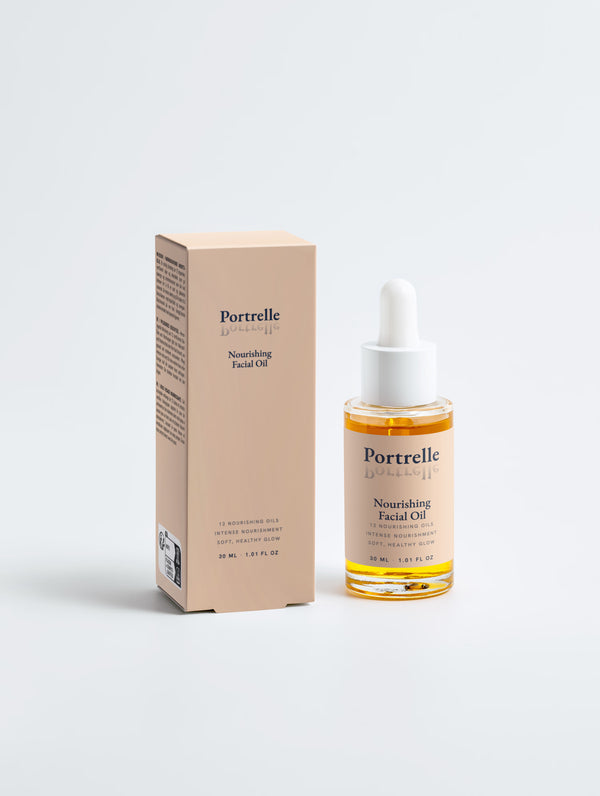
Right at the heart of our Nourishing Facial Oil. We build it on jojoba for that skin-familiar lightness, then pair it with argan for a little extra richness and a soft, cared-for finish. The two balance each other: jojoba keeps things weightless, argan adds cushion. If you want to understand the second half of that pairing, our piece on argan oil for skin covers it in the same plain-spoken way.
A quick word on care. Argan oil is pressed from the kernel of the argan fruit. If you have a tree nut allergy, or any known sensitivity, speak with your pharmacist or doctor before using nut-derived oils. With any new oil it is sensible to patch test on a small area first and see how your skin feels over a day or two.
That is the appeal of jojoba in one line. It behaves like something your skin already knows, so it gets along with more faces than most oils manage. Start with a few drops in the evening, see how your skin feels, and adjust from there.
This article is for general information about skincare ingredients and appearance. It is not medical advice. If you have a specific skin concern, allergy, or condition, please speak with a doctor, pharmacist, or dermatologist.