Retinal, in skincare, is short for retinaldehyde, a form of vitamin A. It is not the retina of your eye, which shares the same spelling and clutters a lot of search results, so to be clear from the very first line: this article is about the ingredient you put on your skin, not eye surgery or eye health. Retinal sits one conversion step closer to skin's active form of vitamin A than retinol does, which is why it tends to work faster, and why some people find it feels more active. Retinol and retinal are close relatives in the same family, so they are related, but they are not the same thing.
Quick answers
- Is retinol the same as retinal? No, both are vitamin A, but retinal (retinaldehyde) sits one conversion step closer to skin's active form, so it usually acts faster.
- Is retinal stronger than retinol? Generally yes, because your skin has fewer steps to convert it, which can also mean a higher chance of irritation.
- Who should pick retinal over retinol? People who already tolerate vitamin A well and want quicker-feeling results, rather than those with reactive or barrier-stressed skin.
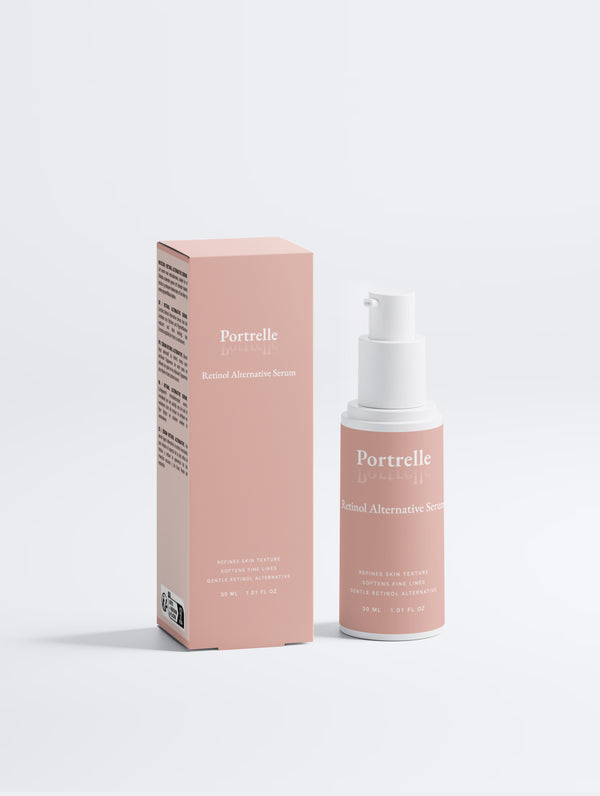
- Does Portrelle sell retinal or retinol? No. We chose plant-based alternatives, bakuchiol and bidens pilosa, for sensitive-leaning skin.
- Do I still need sunscreen? Yes, any vitamin A routine pairs with daily SPF the next morning, no exceptions.
What is retinal, and is it the same as retinol?
Retinal, or retinaldehyde, is one member of the vitamin A family used in skincare. Retinol is another. They are often talked about as rivals, but they are really two points on the same path. Your skin does not use vitamin A in the exact form you apply it. Instead it converts what you put on into retinoic acid, the form skin actually reads and responds to. The closer an ingredient already is to retinoic acid, the fewer steps your skin has to take, and the sooner it tends to get to work.

So no, retinal is not the same as retinol, even though the names are almost identical and the products can look interchangeable on a shelf. If you have read our gentle guide to starting retinol, retinal is essentially the next rung up the same ladder, one small step closer to the active form.
How does the vitamin A family actually work?
It helps to picture a short staircase, with retinoic acid at the top as the active form your skin uses. Working down from there, each name is simply a bit further from that top step:
- Retinoic acid is the active form. It is potent and, at prescription strengths, sits in a doctor's hands rather than a cosmetic bottle.
- Retinal (retinaldehyde) is one conversion step away, which makes it the strongest-feeling vitamin A you tend to find in over-the-counter skincare.
- Retinol is two steps away, the familiar workhorse that has been in serums and creams for decades.
- Retinyl esters, such as retinyl palmitate, are furthest down, the gentlest and slowest, since your skin has the most converting to do.
Each step down the staircase usually means a little less intensity and a little less chance of irritation. Vitamin A as a category is one of the most researched ingredients in skincare for the appearance of fine lines, uneven tone and rough texture, which is why so many routines keep circling back to it.
Why does retinal work faster, and why can it irritate?
Speed and sting come from the same place: fewer conversion steps. Because retinal is only one step from the active form, more of it can be put to use sooner, so people often say they notice a change in how their skin looks a little earlier than with retinol. The trade-off is that the same directness can leave skin feeling tight, looking flaky or turning pink while it adjusts, especially in the first few weeks. None of that means the ingredient is faulty. It is simply skin adapting to a new instruction, and the people who feel it most tend to have reactive, dry or already-stressed skin.
Retinal vs retinol: which should you choose?
There is no universal winner, only a better fit for the skin in front of the mirror. Retinal tends to suit people who already get on well with vitamin A, want quicker-feeling results and have skin that stays calm under active ingredients. Retinol is the steadier starting point, easier to build up slowly and widely available across a range of strengths. If your skin is sensitive-leaning, reactive or new to actives altogether, the gentler option usually wins, because the best vitamin A is the one you will actually keep using.
One honest caveat on medical concerns. Higher-strength vitamin A, in the form of prescription retinoids, is sometimes used under a doctor's care for conditions such as persistent acne. That is a medical route, and cosmetic serums do not treat or cure those conditions. If a skin concern is stubborn, spreading or painful, a dermatologist is the right person to guide it, not a bottle bought online.
The best vitamin A, or vitamin A alternative, is the one your skin tolerates often enough that you actually notice the difference in the mirror.
How do you start any vitamin A without upsetting your skin?
Whether you land on retinal or retinol, the starting method matters more than the number on the label. A few simple habits keep the adjustment period calm:
- Go slowly. Once or twice a week to begin, then build up only as your skin stays comfortable.
- Buffer if you need to. Applying a moisturiser before or after can soften the effect while your skin gets used to it.
- Keep it to the evening. Vitamin A is best used at night, on dry skin, and kept away from the immediate eye area.
- Protect the next morning. Vitamin A can leave skin more sensitive to sun, so daily SPF every morning is not optional.
Patience is the whole game here. Skin renews on its own timeline, and pushing a strong active harder rarely speeds anything up. It usually just trades a few weeks of comfort for no extra reward, and a lot of people quit at exactly the point where a slower start would have kept them going.
Why doesn't Portrelle sell retinal or retinol?
Here is the part some brands would rather skip. Portrelle does not sell retinal or retinol at all. We looked closely at the whole family, we respect the science, and we decided it was not the right fit for the sensitive-leaning skin we design for. Instead we chose plant-based alternatives, built around bakuchiol and bidens pilosa, which many people find gives the smoothing, refined feel they want from a vitamin A routine with less of the tightness and flaking.
We are not claiming these plants are identical to retinal, because they are not, and we would rather be straight with you than oversell a story. What we can say is that they are gentler by nature, easier to live with day to day, and a genuine option for anyone whose skin has never got along with a strong retinoid. If you want the full comparison, we wrote it up in our guide to bakuchiol and bidens pilosa.
Vitamin A is not the only ingredient that arrives wrapped in big promises, and it helps to know how to read the newer ones. Exosomes are the current example, marketed hard and studied far less than the retinoid family, and we looked at that trend the same plain way in our honest take on exosomes in skincare.
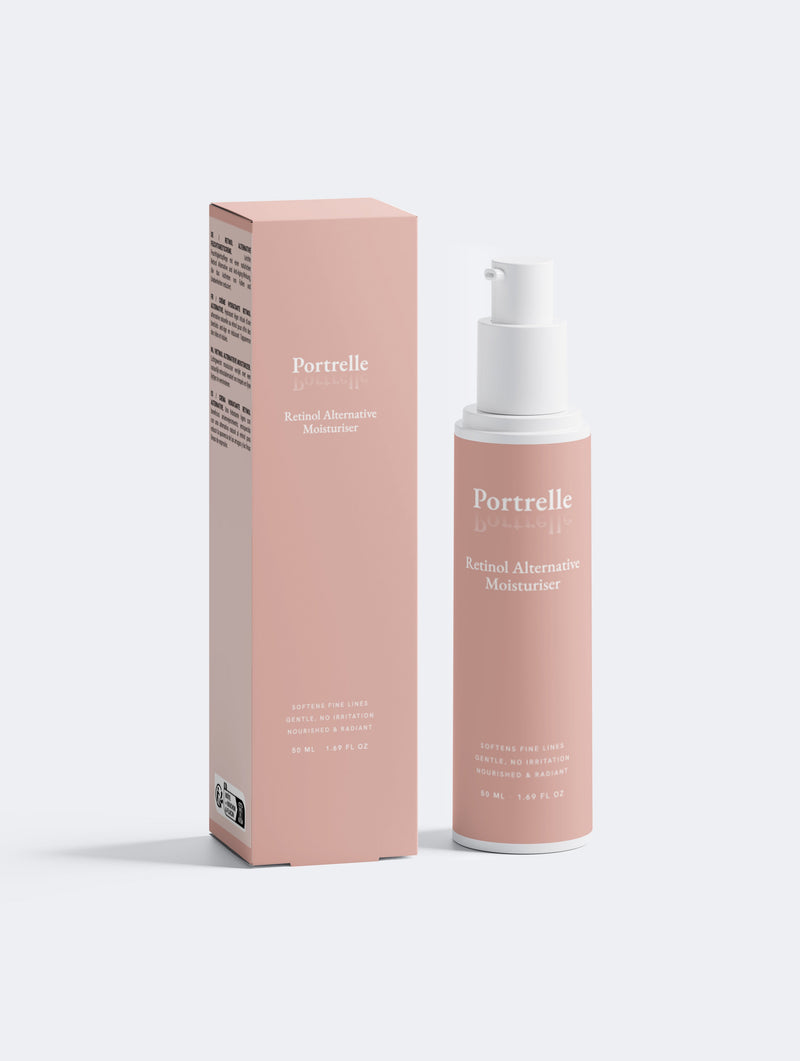
You will find that thinking across our age and firm collection, from the Retinol Alternative Serum to the matching moisturiser, oil and eye serum. And if you are not sure where to begin, the Find Your Ritual quiz points you to a routine that suits how your skin actually behaves, rather than whatever is trending this month.
Read next
- Wrinkles: What Actually Helps (and What Honestly Does Not)
- Exosomes in Skincare: The Trend Explained Honestly
Skincare results vary from person to person, and everything here describes how skin looks and feels rather than any medical outcome. If you are managing a diagnosed skin condition or ongoing irritation, a dermatologist is the right person to guide treatment.