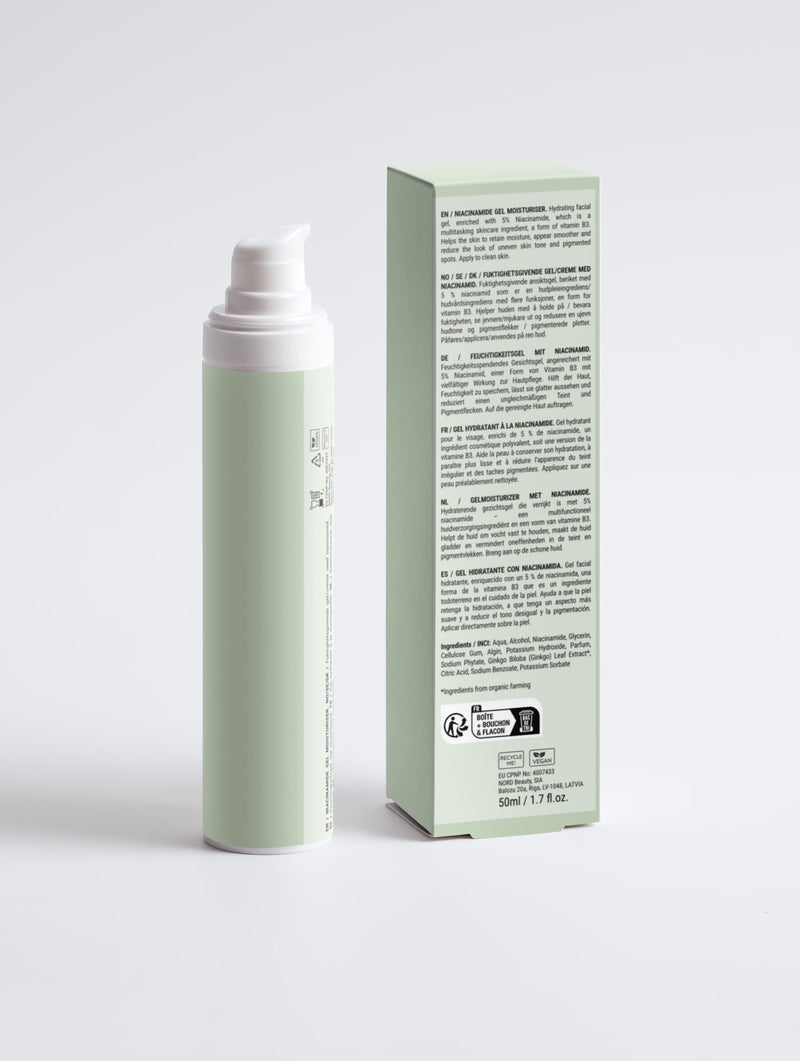
Niacinamide is vitamin B3, a water-soluble vitamin that turns up in a lot of skincare. Used daily, it helps skin look more even and feel more comfortable, which is why you will find it in routines for almost every skin type. It supports the look of a healthy skin barrier and softens the appearance of enlarged pores and uneven tone. It also calms visible shine without leaving skin feeling tight.
What is niacinamide, and what does it do?
Used consistently, niacinamide helps refine the look of uneven tone and enlarged pores. It supports a healthy-looking skin barrier and helps keep oily shine in check. It is gentle enough for daily use, morning and evening, and it layers well with almost everything else in your routine. Because it is not an acid and not an exfoliant, most people can add it without the tingling or peeling that stronger actives sometimes bring. Think of it as a quiet all-rounder. It will not change your skin overnight, but with regular use it helps skin look clearer and feel more comfortable.
Who does niacinamide suit?
Nearly everyone. Combination and oily skin tend to like it for the balanced, refined finish. Dull or unevenly toned skin appreciates the brighter look over time. Sensitive skin usually tolerates it well, again because it is not an acid and not an exfoliant, so it is a gentle way to support the barrier. If your main concern is shine and blemish-prone skin, niacinamide sits naturally in an oil-balance routine like our Clear & Balance collection.

Does niacinamide have side effects, and can skin react to it?
Niacinamide is well tolerated by most people, including many with sensitive skin. Reactions are uncommon, but no ingredient suits everyone. A small number of people notice mild redness, warmth or a light tingle when they first start, usually at higher strengths or when several new products go on at once. To keep things easy on your skin, introduce one new product at a time, start once a day and build up to twice, and patch test on a small area first. If you notice lasting irritation, stinging or a rash, stop using it. For anything that does not settle, or for a skin concern that worries you, speak to a GP or dermatologist. Niacinamide describes how skin looks and feels, so it is not a replacement for medical advice.
Niacinamide is not an acid and not an exfoliant, which is why so many skin types get on with it.
Can you use niacinamide and vitamin C together?
Yes. You may have read that the two cancel each other out, but that idea comes from old laboratory conditions, not the stable, well-made products on shelves today. In a normal routine you can layer them, or use vitamin C in the morning and niacinamide in the evening, whichever feels simpler. If your skin is on the sensitive side, splitting them across the day can feel gentler while you settle in. Both are popular for a brighter, more even look, so they work as companions rather than rivals.

Does niacinamide help with the look of dark spots?
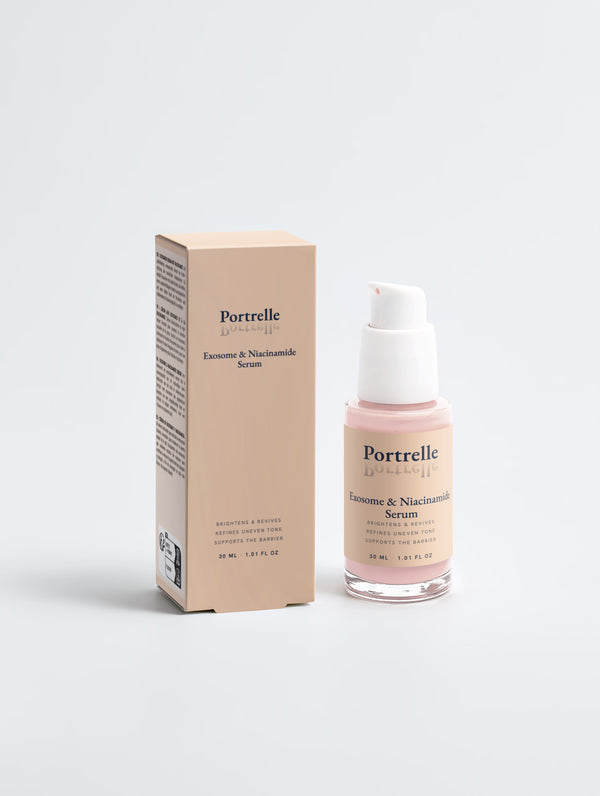
Niacinamide is a favourite for anyone bothered by the look of dark spots and uneven tone, because over time it helps skin look brighter and more even. It does not bleach or erase anything. With steady daily use it simply supports a fresher, more even appearance. If dark spots are your main focus, niacinamide appears alongside apple exosomes, centella and hyaluronic acid in our Exosome & Niacinamide Serum, and you can read our full guide on dark spots and what actually helps. Prefer to build a brightening routine step by step? Our Glow & Brighten collection is a good place to look. One important note: if a dark spot changes shape, colour or size, or simply looks different from the rest, have it checked by a GP or dermatologist rather than treating it as a cosmetic concern.
What percentage of niacinamide makes sense?
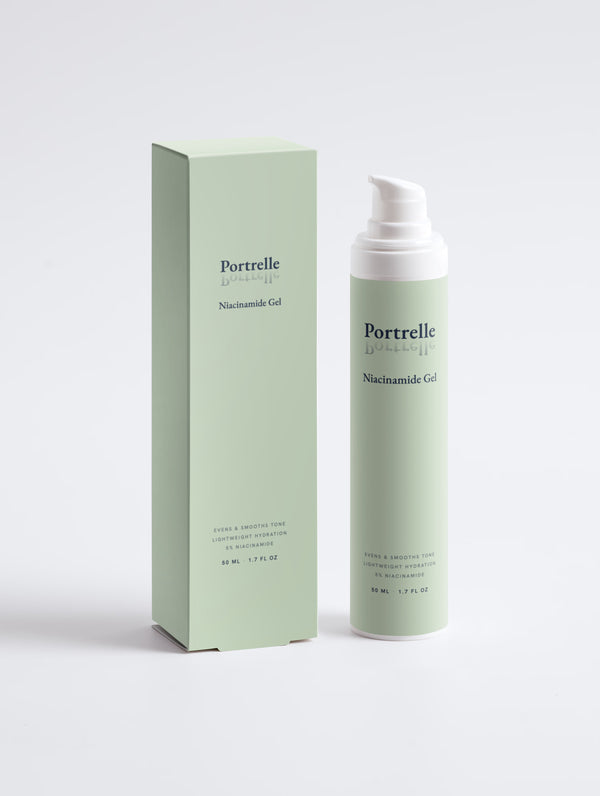
More is not better with niacinamide. Formulas around 5% do the everyday work well and stay comfortable for daily use, while very high strengths are more likely to feel warm or tingly on sensitive skin without adding much in return. You will also see lower amounts, such as 2% to 4%, which can be a comfortable starting point if your skin reacts easily. Our Niacinamide Gel pairs 5% niacinamide with lightweight hydration, so you get a sensible, well-tolerated level in a single step.
How do you use niacinamide, and which product should you choose?
Apply a niacinamide product to clean skin once or twice a day. It layers happily with hyaluronic acid, peptides and SPF, and it is a good companion to exfoliating acids because it supports the barrier while they do their work. For the simplest routine, the Niacinamide Gel works as a treat-and-moisturise step in one. If you would rather layer a serum under your moisturiser, the Exosome & Niacinamide Serum brings niacinamide together with apple exosomes, centella and hyaluronic acid. Not sure where to begin? Our find your ritual guide points you to a routine that fits your skin.
Quick answers
Can I use niacinamide every day?
Yes, morning and evening. It is designed for daily use.
Does niacinamide have side effects?
It is well tolerated by most people. A few notice mild redness or a light tingle at first, which usually settles as skin gets used to it.
Can I use niacinamide with vitamin C?
Yes. Modern formulas pair the two without trouble, whether you layer them or split them between morning and evening.
What strength should I look for?
Around 5% suits daily use and stays comfortable. A higher number is not automatically better.
Read next
- Niacinamide vs Vitamin C: Which One Does Your Skin Need?
- Oily Skin Care: How to Balance It Without Stripping
- Large Pores: What Actually Helps (and What Is a Myth)
Experiential claims describe how skin looks and feels. Individual results vary.