Niacinamide and vitamin C do different jobs, so most skin does not actually have to choose between them. Pick niacinamide first if your skin looks oily or shiny, if pores draw attention, or if your barrier feels easily upset. Pick vitamin C first if your main wish is more glow and help with the look of dark spots and dullness.
These two get pitted against each other a lot, usually because they are the most talked about serums on the shelf. The truth is calmer than the debate. They solve different problems, and you can even use both. The old rule that says you cannot combine them is one of the most repeated myths in skincare, and it does not hold up for modern formulas.
Quick answers
Can you use niacinamide and vitamin C together?
Yes. Today's formulas combine them without any trouble. The warning you may have read came from old lab tests under conditions that do not match the products you buy now.
Which is better for the look of dark spots?
Vitamin C is the usual first pick for the appearance of uneven tone, and niacinamide supports it nicely. If you are dealing with melasma or spots linked to a medication, see a doctor or dermatologist first.
Which one suits oily or shiny skin?
Niacinamide. It helps balance the look of oil and the appearance of pores, and it feels light and comfortable on skin that gets shiny by midday.
Can you apply them at the same time?
You can. A simple habit is vitamin C in the morning under SPF, then niacinamide in the morning or the evening, whenever it fits your routine.
What does niacinamide do best?
Niacinamide is a form of vitamin B3, and it is one of the most easygoing actives you can put on your face. It helps the look of oil balance, so skin can stay less shiny as the hours go by, and it softens the way pores catch the eye. Over time it can help even out the look of tone, and it tends to leave the barrier feeling calmer and more comfortable.
That last point is the quiet reason so many people love it. If your skin flushes easily, or feels tight after stronger products, niacinamide is usually the gentle one that plays well with everything else in the routine. It is also happy to be used every day, morning and night, which makes it a low effort habit to keep. For the full picture, read what niacinamide actually does for your skin.
What does vitamin C do best?
Vitamin C is the glow ingredient. Used in the morning, it brings a fresher, brighter look to tired skin. It is best known for helping the appearance of dark spots and uneven tone over time, so the face looks more even. It also has an antioxidant story: it helps defend the look of skin against daily stress from light and pollution, which is exactly why it belongs in your morning step under sunscreen. It asks for a little more care than niacinamide, since it prefers to be kept cool and out of strong light, but the payoff is that morning glow.
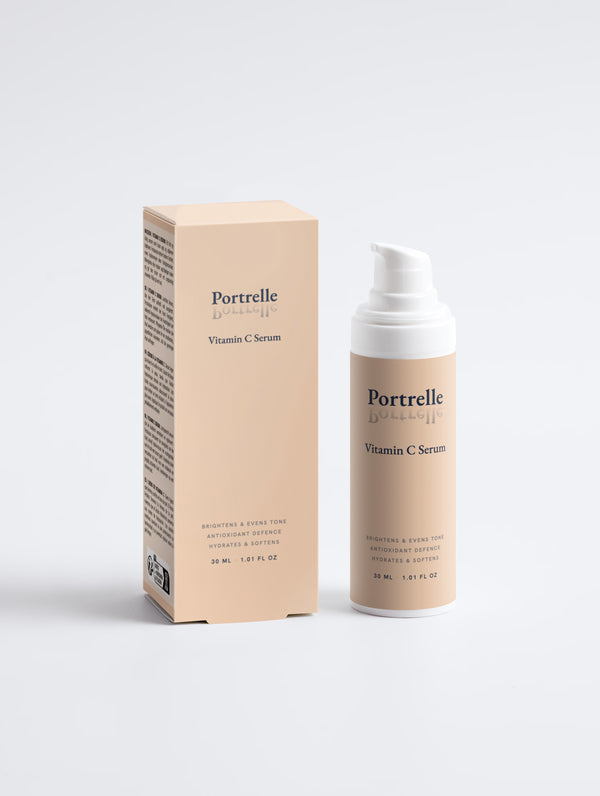
If you want the details on strengths, textures and how to store it so it stays fresh, our vitamin C serum guide walks through all of it. You can also look at our own Vitamin C Serum if you already know this is your pick.

Can you use niacinamide and vitamin C together, or is that a myth?
You can, and the fear is a myth. It goes back to old research where pure forms of the two ingredients, heated together in a lab, could shift colour. People took that to mean the pair cancels out on your skin. In real products, at the amounts you actually use, that is not what happens.
Modern serums are made to keep both ingredients stable and effective. Plenty of well made products even put them in the same bottle on purpose. So if you like both, you do not have to keep them in separate drawers, or on separate months of some rotation. Use them, and let your skin be the judge of how it looks and feels.
The better ingredient is the one that fits your goal, not the one with the louder marketing.
Which should you pick for your skin goal?
Here is a simple way to choose your first step. If you are torn, start with the row that sounds most like your skin today, and add the second ingredient later once your routine feels settled.
| Your goal | Where to start |
|---|---|
| Oily, shiny skin and the look of pores | Niacinamide |
| The look of dark spots and uneven tone | Vitamin C, with niacinamide alongside |
| Dullness and wanting more glow | Vitamin C |
| Sensitive skin, barrier feels stressed | Niacinamide |
| Antioxidant support during the day | Vitamin C in the morning |
| Both benefits in a single step | Exosome and Niacinamide Serum |

When do you use each one in your routine?
The order is easy to remember. In the morning: cleanse, apply vitamin C, then moisturiser, then sunscreen. Vitamin C likes the daytime because it works alongside your SPF against daily stress. Niacinamide is the flexible one. It fits in the morning or the evening, and it sits happily under or over most other steps without fuss. If you want the exact sequence for a whole routine, we lay it out in the right order for a five step routine.
One honest note on dark spots: the look of uneven tone changes slowly, with time and consistency, and no serum does it overnight. For a fuller look at what helps and what is not worth your money, see what actually helps with dark spots. Melasma, or marks tied to old breakouts or a medication, are worth a proper conversation with a dermatologist rather than a shelf of serums.
What if you want both in one step?
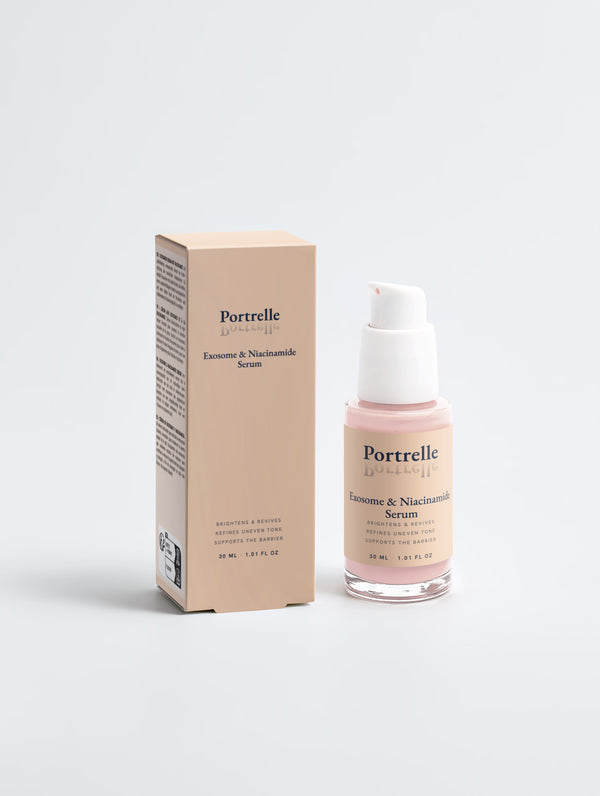
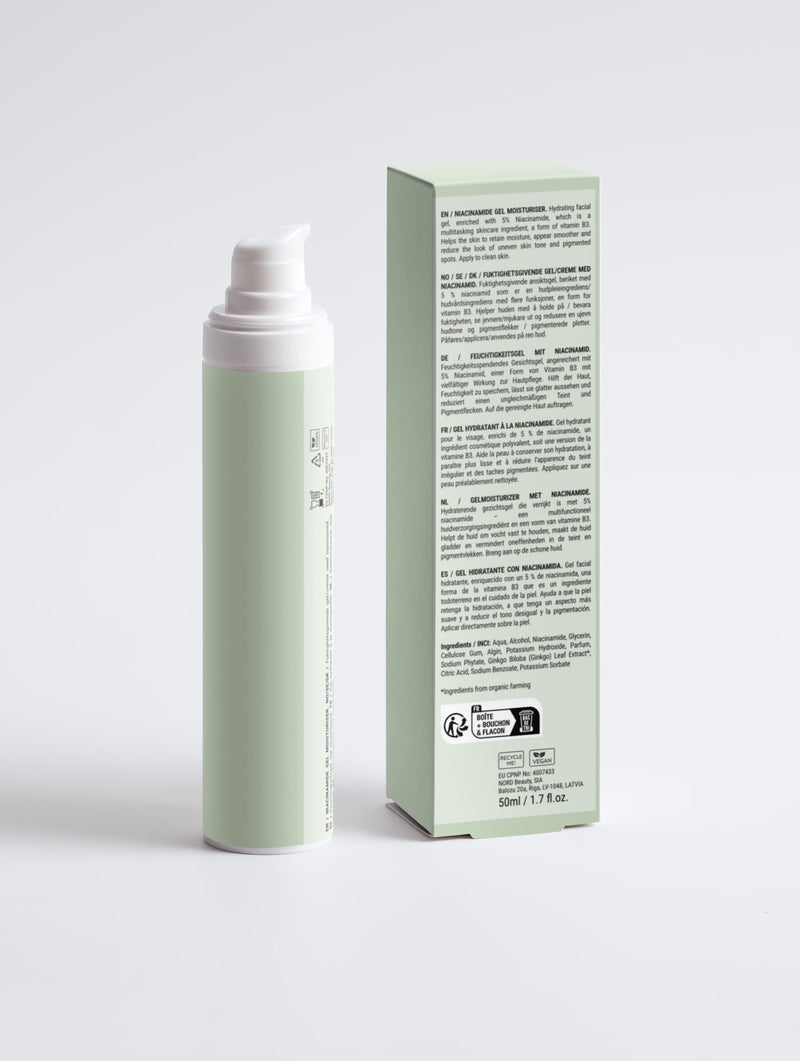
If the idea of both worlds in one bottle appeals to you, that is exactly why we made our Exosome and Niacinamide Serum. It brings niacinamide together with exosomes for a brighter look and a barrier that feels supported, all in a single morning or evening step. Prefer to keep niacinamide on its own? Our 5% Niacinamide Gel moisturiser does that job as a light, everyday layer, and vitamin C stays as your separate morning serum.
There is no wrong answer here. Niacinamide and vitamin C are not rivals fighting for a place in your routine. They are two good ingredients that happen to be better together, once you know when to reach for each one.
Experiences vary from person to person. This article is informational and is not medical advice. If you have a specific skin concern, or you are unsure about combining products, please speak with a doctor or dermatologist.