Vitamin E is one of the oldest antioxidants in skincare, and one of the most quietly useful. On an ingredient list you will usually see it written as tocopherol. Its role is simple. It helps protect the feel and the look of your skin against everyday environmental stress like pollution. It is a supporting player rather than a miracle, which is exactly what makes it worth understanding.
If your search started with "vitamin e for skin" or the Dutch "is vitamine e goed voor je huid", here is the short version before the detail.
Quick answers
Is vitamin E good for your skin?
For most people, yes. It is a well established antioxidant that helps skin cope with daily environmental stress. It is common, well studied, and gentle in normal cosmetic amounts.
What does vitamin E do for your skin?
It works as an antioxidant. In plain terms, it helps defend the look and feel of your skin against the small daily stresses that dull it over time. It also has a soft, conditioning feel that many oils and creams lean on.
What does vitamin E oil do?
A vitamin E oil or a pierced capsule delivers a heavy dose of tocopherol straight onto the skin. It can feel rich and cushioning, but neat vitamin E is not the gentle option that social media makes it look. More on that below.
Is vitamin E on the skin dangerous?
In normal cosmetic concentrations, vitamin E is considered well tolerated. Reactions are uncommon, but they are possible, especially with pure high dose forms. If your skin is sensitive, patch test first, and speak to a pharmacist or dermatologist if a reaction does not settle.
Can you put a vitamin E capsule on your face?
You can, and plenty of people do. But a capsule is undosed and heavy, so it suits a dry patch more than a whole blemish-prone face. A formulated product is the calmer choice.
What is vitamin E, really?
Vitamin E is not a single molecule but a small family of fat soluble compounds. The one you will see most on a label is tocopherol, sometimes written as tocopheryl acetate, which is a more stable version. Because it is fat soluble, it sits comfortably in oils and rich creams, which is why you find it in so many of them.
As an antioxidant, its job is to help buffer the effect of free radicals, the unstable molecules that everyday things like sunlight and pollution create on the skin's surface. Picture it as a small shock absorber that helps your skin hold onto its healthy look for longer. It is not doing anything dramatic. It is doing something steady.
Why is vitamin E so often paired with vitamin C?
If you read enough ingredient lists you will notice vitamin E and vitamin C keep showing up together. That is not a coincidence. The two antioxidants support each other, so a formula that carries both tends to be more stable, and more useful, than either one working alone. Vitamin C brings the brightening, fresh-looking glow, and vitamin E helps keep the whole thing steady.
We wrote a full companion piece on how that brightening side works in our vitamin C serum guide, if you want to go deeper on the partner ingredient.

What about vitamin E oil and capsules?
Here is where honesty matters. Search "wat doet vitamine e huidolie" and you will find a wave of videos showing people piercing a vitamin E capsule and pressing the contents straight onto their face. It looks simple and natural, and for one very dry patch it can genuinely feel lovely.
But neat, high dose vitamin E is not automatically the kind choice. On its own it can feel heavy and occlusive, which blemish-prone skin often does not love. And in its purest forms it can irritate some skins rather than soothe them. The dose and the delivery matter as much as the ingredient itself.
This is the quiet advantage of a formulated product. A good formula doses vitamin E sensibly, balances it with other ingredients, and gives it a texture your face can actually wear every day. For most people that beats a raw capsule, whichever way social media leans. The same goes for the French search "vitamine e visage capsule": a capsule is a fine emergency for a dry spot, but it is not a daily plan.
Is vitamin E on the skin safe?
The French search "vitamine e peau danger" comes up a lot, so let us answer it plainly. In the normal concentrations used in cosmetics, vitamin E is considered well tolerated. It is one of the more familiar ingredients in the whole category, and reactions are uncommon.
Uncommon is not never, though. Some people, particularly those with sensitive or reactive skin, can react to vitamin E, and that risk is a little higher with pure, undiluted forms than with a balanced formula. So the sensible habit is the same one we suggest for any new product. Patch test on a small area first, wait a day, and see how your skin feels before you go further. If a reaction lingers, that is a moment for a pharmacist or dermatologist, not a stronger dose.
Vitamin E is a supporting act, not a headliner. Used sensibly, it quietly helps your skin look and feel its best. Used carelessly, straight from a pierced capsule, it can be more than some skins want.
Does Portrelle use vitamin E?
Here is the part where we keep our own rule. We do not make ingredient claims we have not verified, so we are not going to tell you our products are packed with vitamin E when that is not something we can stand behind. Honesty is the whole point of this brand, not a footnote to it.
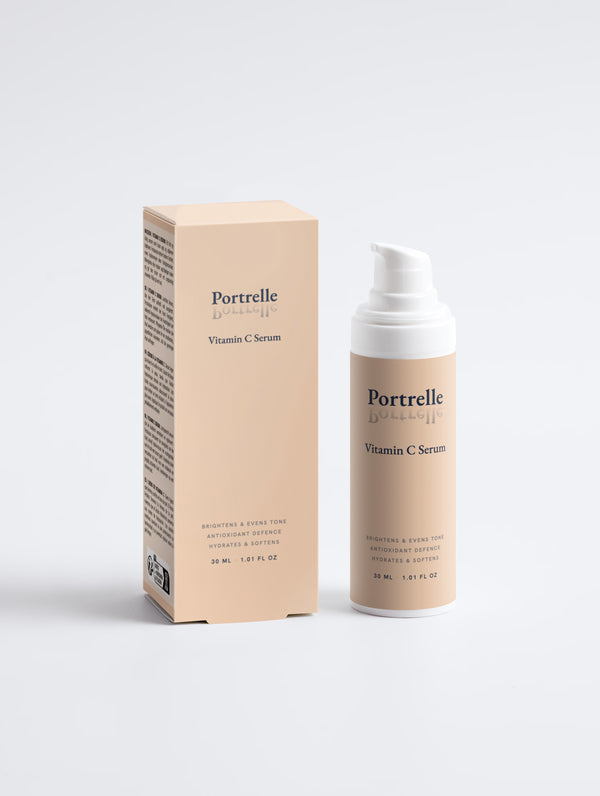
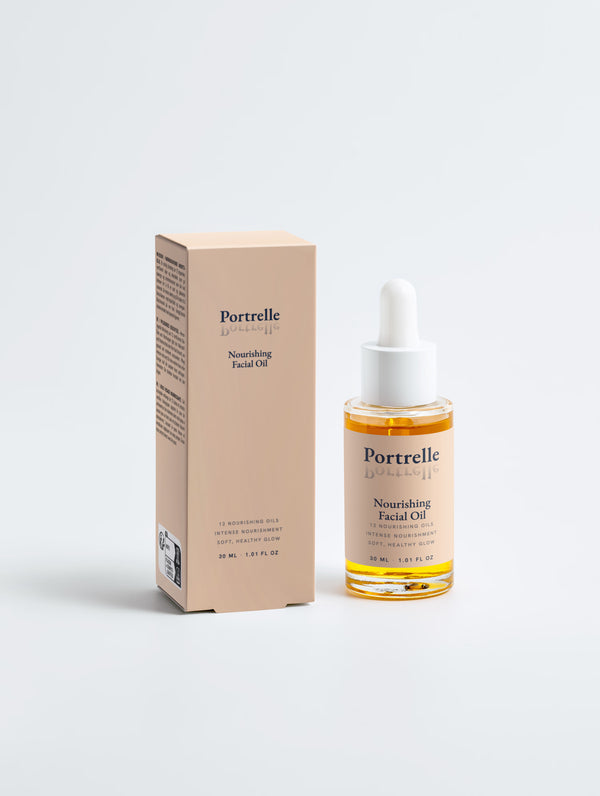
What we can point you to is honest. If you want antioxidant support in your routine, our route is the Vitamin C Serum, a brightening vitamin C serum that leans on the antioxidant partner we talked about earlier. And if what you are really after is the nourishing, cushioning oil feel that people chase with vitamin E oils, our Nourishing Facial Oil gives you that through jojoba and argan instead.

Those two oils do a lot of the comforting, softening work people associate with a rich vitamin E oil, and we can tell you exactly what is in them. You can read more about each in our jojoba oil explainer and our argan oil explainer, or step back for the bigger picture in our facial oil guide.
So, is vitamin E good for your skin? As a steady, well tolerated antioxidant, it earns its place. Just treat it as the supporting player it is, stay a little wary of raw capsules, and choose a formula that doses it with some care.
This article is general information about skincare ingredients and how skin looks and feels, not medical advice. If you have a specific skin concern, or a reaction that does not settle, please speak to a doctor, pharmacist or dermatologist.