Tranexamic acid is a brightening ingredient found in some serums and creams, used to help the look of dark spots and uneven tone. In skincare it goes on your skin, not in your mouth, and it is usually blended with niacinamide or arbutin. Portrelle does not sell a tranexamic acid product, so treat this as an honest guide: what it does, who it suits, and what we reach for instead.
One quick note before we go further. If you searched this in Dutch as "tranexaminezuur," you may have meant the medicine your doctor prescribes. That is a different conversation, and we come back to it below.
Quick answers
Is tranexamic acid the same as the medication?
It is the same molecule, used in a very different way. The tablets a doctor prescribes are taken by mouth for heavy bleeding. Skincare uses a small amount applied to the skin, for the look of even tone.
Does Portrelle sell a tranexamic acid product?
No, we do not. We work on the look of dark spots with alpha-arbutin, kojic acid and vitamin C instead. We would rather stand fully behind the ingredients we chose.
Can you pair it with vitamin C or niacinamide?
Yes. Tranexamic acid is easy-going and is often combined with niacinamide or arbutin in the same routine. Introduce one new product at a time so your skin can settle.
How long until you see a difference?
Most people look for changes in the appearance of tone over roughly eight to twelve weeks of steady use. Pigment fades slowly, whatever the ingredient. Daily sunscreen matters more than any single serum.
Is tranexamic acid the same as the medication your doctor prescribes?
This is the part worth slowing down for. In Dutch and French, most people who search "tranexaminezuur" or "acide tranexamique" are looking for the medicine, often sold as Cyklokapron. Doctors prescribe those tablets for heavy periods and other bleeding, and they belong in a conversation with your doctor or pharmacist.
This article is only about the cosmetic, topical use: the version that sits in a serum or cream and is applied to the surface of your skin for the look of even tone. We do not give medical advice. If you have questions about the tablets, the dose, or whether they suit you, ask your doctor. We will not blur the two, because in practice they are not the same thing.
What is tranexamic acid?
Tranexamic acid is a small, water-loving molecule with a long history in medicine, which is a big reason the name causes such confusion. In cosmetics it is valued as a brightening ingredient, which in plain terms means it is used to help skin look more even. You usually find it at modest strengths, tucked into a serum next to other tone helpers rather than sold on its own.
It has a good reputation for being gentle. Most skin types tolerate it well, including skin that finds stronger acids or retinoids too much. That easy temperament is a big part of why formulators reach for it, and why it appears in so many "brightening" and "even tone" products on the shelf.
What does tranexamic acid do for your skin?
Used on the skin, tranexamic acid supports a more even-looking complexion and may help the look of dark spots and blotchy tone over time. It is popular for the kind of discolouration that lingers after a blemish has cleared, and for the general dullness where skin simply looks uneven rather than marked in one spot.
The way people describe it is that it seems to calm the look of pigment that sun and heat keep stirring up. That is also why it is a favourite for warmer months and for skin that flushes easily. None of this happens overnight.
It plays well with company. In a good formula it often sits beside niacinamide, which supports the skin barrier and its look, or alpha-arbutin, another brightening favourite. These are patient ingredients that reward a routine you actually keep, not a single dramatic week.

How fast do you see results on dark spots?
Slowly, and that is normal. Skin renews on its own timeline, and the look of pigment sits deeper than any wash-off product can reach in a hurry. Most people give a brightening routine, tranexamic acid included, around eight to twelve weeks before judging it. Consistency beats intensity here. A serum used most days for three months will almost always do more than a stronger one used in bursts.
One habit protects all the others: sunscreen. Without daily SPF, sun exposure keeps nudging pigment back, so every brightening step is working against the tide. A mineral SPF50 stick makes the midday reapply easy to keep up. For the full picture on what actually shifts discolouration, our guide on dark spots and what actually helps is the place to start.
Why doesn't Portrelle sell tranexamic acid?
Honestly, because we did not feel we needed it. Tranexamic acid is a fine ingredient, and if a product you love already contains it, there is no reason to stop. We simply built our tone range around a few ingredients we know deeply and can stand behind without hedging. That is the whole idea behind an honest range: fewer ingredients, chosen on purpose, explained without spin.
A good ingredient is not a secret. Tranexamic acid works for plenty of people. We just chose a different route to the same honest goal.
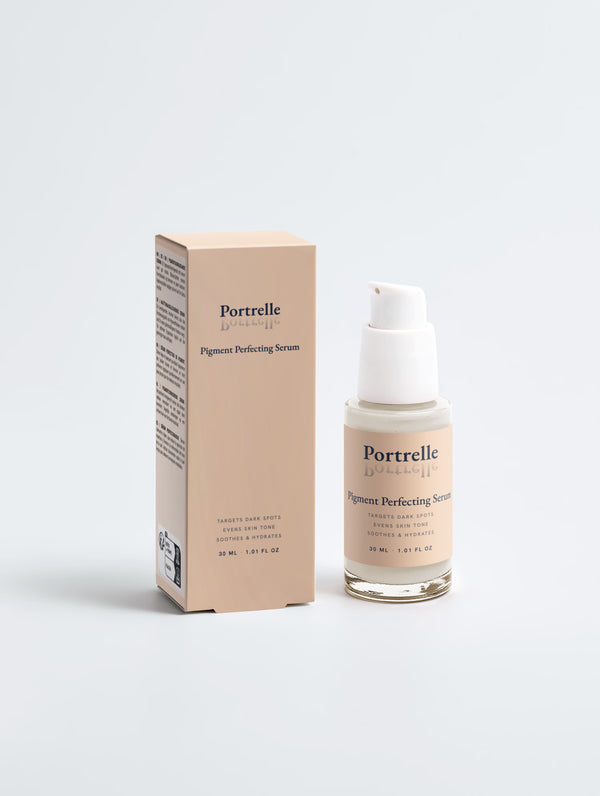
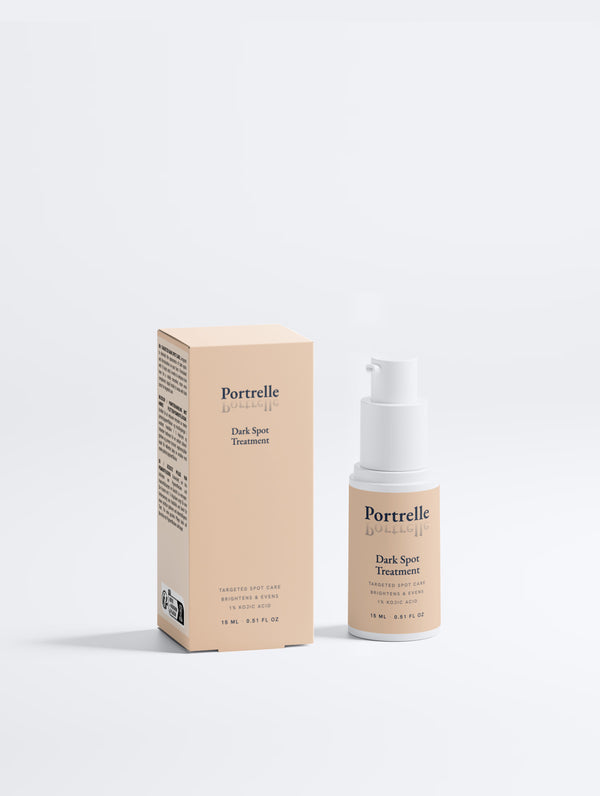
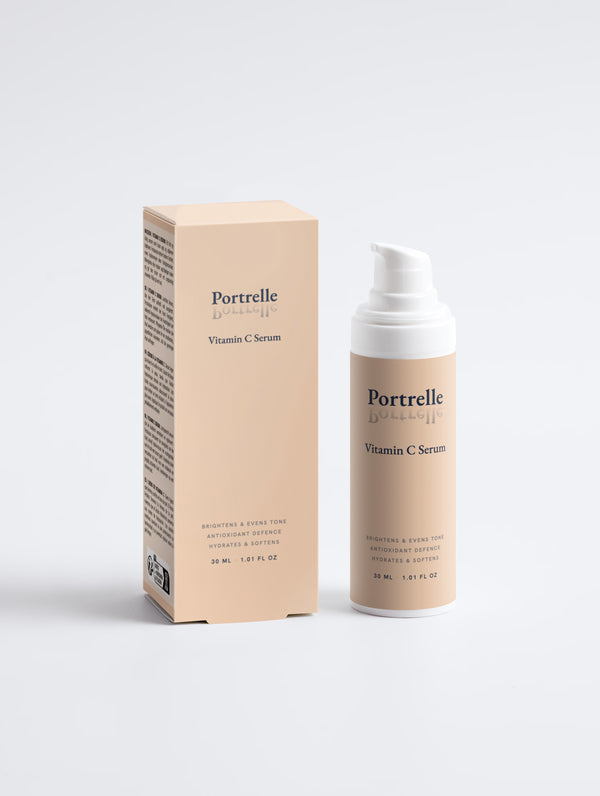
For everyday brightening we use alpha-arbutin in our Pigment Perfecting Serum, made to help the look of dark spots and uneven tone. For spots you want to target more directly, our Dark Spot Treatment leans on kojic acid, and our kojic acid explainer covers how that one works. Our Vitamin C Serum sits alongside both for antioxidant support with a brightening feel. Whatever you choose, daily sunscreen does the quiet heavy lifting.
Here is how tranexamic acid sits next to what we use, in plain terms:
| Ingredient | Known for (the look of skin) | At Portrelle |
|---|---|---|
| Alpha-arbutin | Gentle, everyday brightening for the look of dark spots | Pigment Perfecting Serum |
| Kojic acid | More targeted help for the look of individual spots | Dark Spot Treatment |
| Vitamin C | Antioxidant support with a brightening feel | Vitamin C Serum |
| Tranexamic acid | Well-liked brightening ingredient, often paired with niacinamide | Not sold by Portrelle |

What about melasma and stubborn pigmentation?
Some discolouration deserves more than a serum. Melasma in particular is complicated, it can be driven by hormones, and it often needs a professional plan to manage. If your dark patches are spreading, sit symmetrically across the cheeks, or simply will not budge, please see a dermatologist rather than layering on more products. A dermatologist can also tell you whether the topical route makes sense at all, or whether your patches need something else entirely. Our honest take on melasma and what actually helps explains why a doctor belongs in that story.
Experiences vary from person to person. This article is informational and is not medical advice. For the tranexamic acid medication, or for any pigmentation that worries you, please speak with your doctor or dermatologist.