Breakouts that keep appearing on your chin and forehead are usually about what touches those areas, not a hidden message about your internal organs. The chin and jaw often react to hormonal shifts across the month, along with friction from phones, hands and face coverings. The forehead tends to respond to hair products, a fringe, sweat and heavy styling creams that sit against the skin.
Is face mapping real?
You have probably seen a diagram that links each part of your face to an organ, with the chin tied to hormones and the forehead tied to digestion. It is an old idea, and it is not supported by modern skin science. Where blemishes appear has far more to do with local factors like oil glands, friction and the products you use than with the state of your gut or liver. That is reassuring, because local factors are the ones you can actually change.
Why do I get breakouts on my chin and jaw?
The lower face has a high number of oil glands, and these glands are sensitive to the natural hormonal changes that happen across a monthly cycle. Many people notice more blemishes along the chin and jaw in the days before a period, when oil production tends to rise. This is normal, and it does not mean something is wrong with you.

Contact and friction add to it. Resting your chin in your hand during the day, holding a phone against your jaw, or wearing a mask for long stretches can press oil, sweat and bacteria into the skin. Wiping your phone screen, keeping your hands away from your face and changing to a fresh mask all take some pressure off this zone.
Where breakouts appear says more about friction and hair products than about any organ behind the skin.
Why do I get breakouts on my forehead?
The forehead sits right next to your hairline, so it picks up whatever is in your hair. Styling creams, waxes, oils and some conditioners can migrate onto the skin and block pores, a pattern sometimes called pomade breakouts. A fringe makes this more likely, because it holds product and sweat against the forehead all day.
Sweat plays a part too. After exercise or on a warm day, sweat mixes with oil and any leftover styling product and sits on the skin until you rinse it away. Blotting your forehead with clean hands or a soft cloth, rinsing after a workout and keeping heavy products off your hairline can all help the skin here look clearer.
Which everyday habits help chin and forehead breakouts?
A few small changes often make more difference than any single product. For a broader look at what supports blemish-prone skin, our guide on what helps blemish-prone skin is a good place to start.

- Clean anything that touches your face often, from your phone to your pillowcase.
- Keep hair off your forehead when you can, and rinse styling product from your hairline at night.
- Rinse your skin after sweating instead of letting sweat dry on it.
- Try not to pick or squeeze, since this can leave blemishes looking redder for longer.
- Keep your routine gentle and steady rather than scrubbing hard the moment a breakout appears.
What routine helps blemish-prone chin and forehead skin?
You do not need a long routine to support blemish-prone skin. The aim is to cleanse gently, keep oil balanced and give the odd blemish some focused attention where it appears.
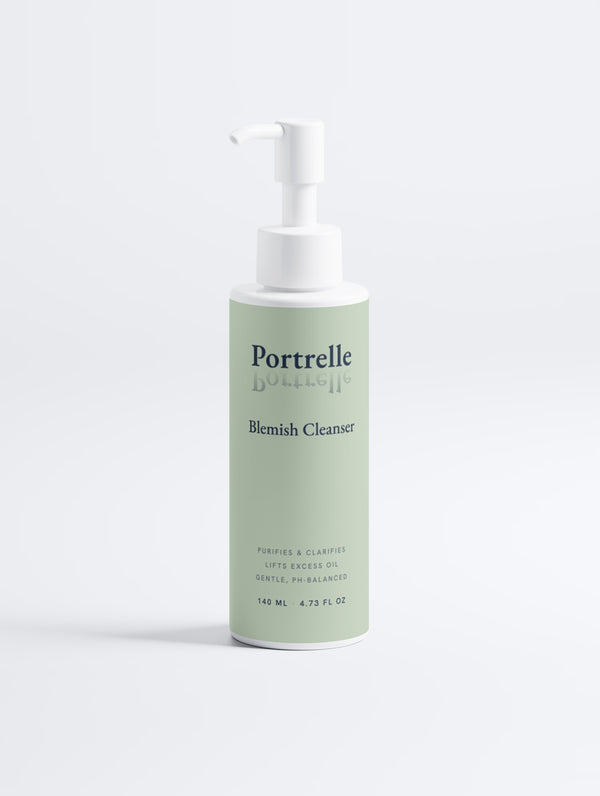
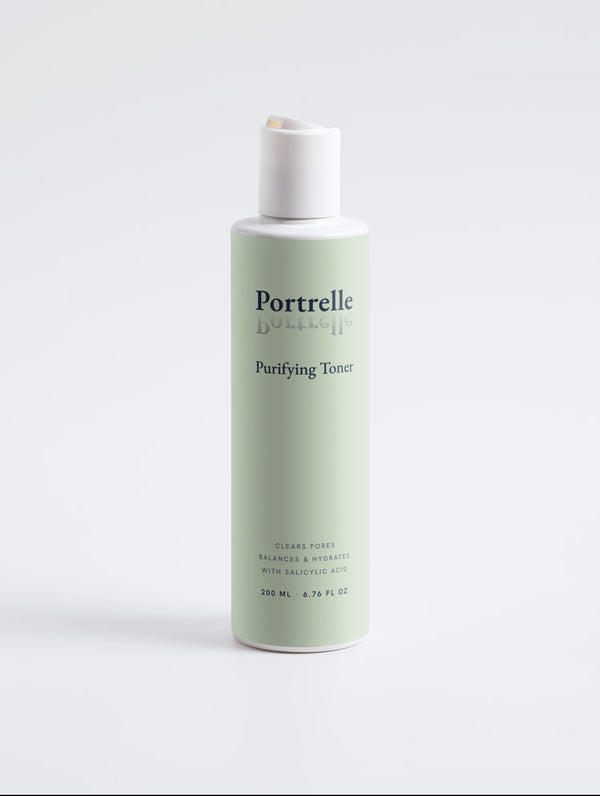
Start with a gentle wash. Our Blemish Cleanser is pH-balanced, so it cleans without leaving skin tight. Follow with the Purifying Toner, a salicylic toner that helps skin along the chin and forehead feel fresh and look more even.
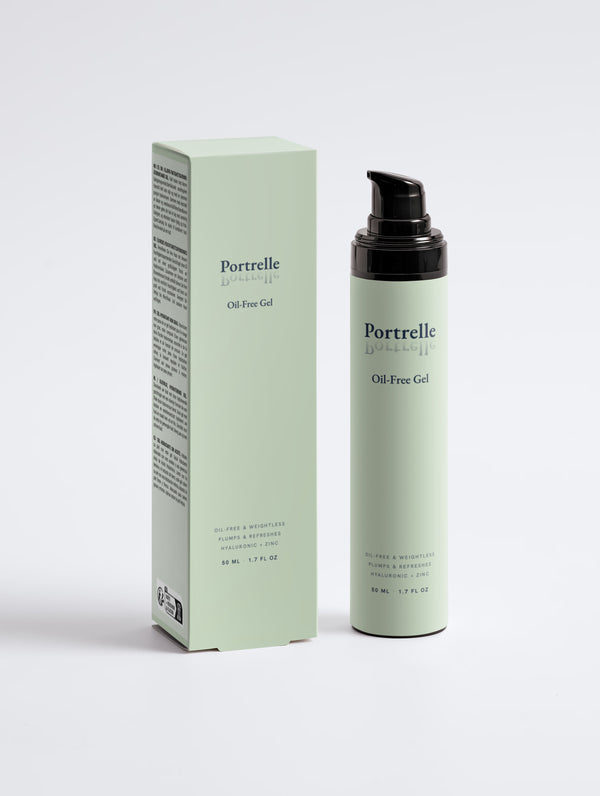
For hydration that will not add oil, the Oil-Free Gel pairs zero-oil moisture with zinc, so blemish-prone skin stays comfortable without a heavy feel. When a single spot appears, the Blemish Treatment brings salicylic acid, tea tree and charcoal into a focused care step you can apply just where you need it.
If you would rather shop the steps together, the Clear & Balance collection gathers them into one line for blemish-prone skin.
When should I see a doctor about breakouts?
Skincare can help blemish-prone skin look and feel better, but it does not replace medical care. If your breakouts are painful, deep, widespread or simply not settling with a gentle routine, it is worth speaking to your GP or a dermatologist. The same applies if your skin changes suddenly, or if you notice a dark spot or mark that looks new, is growing or is changing in colour.
Quick answers
Does chocolate or greasy food cause chin breakouts?
There is no single food that causes breakouts for everyone, and diet affects each person differently. If you notice a clear pattern with your own skin, mention it to a GP or dermatologist.
Do hair products cause forehead breakouts?
They can play a part, because styling creams, oils and waxes can move onto the skin and block pores. Keeping heavy products away from your hairline often helps the forehead look clearer.
Should I stop moisturising when my skin breaks out?
No, skipping moisture can leave skin tight and prompt it to produce more oil. An oil-free option like the Oil-Free Gel keeps blemish-prone skin comfortable without a heavy feel.
How long until my skin looks clearer?
Everyone is different, so there is no fixed timeline. A gentle, steady routine gives blemish-prone skin a good chance to look and feel its best, and results vary from person to person.
Read next
Experiential claims describe how skin looks and feels. Individual results vary.